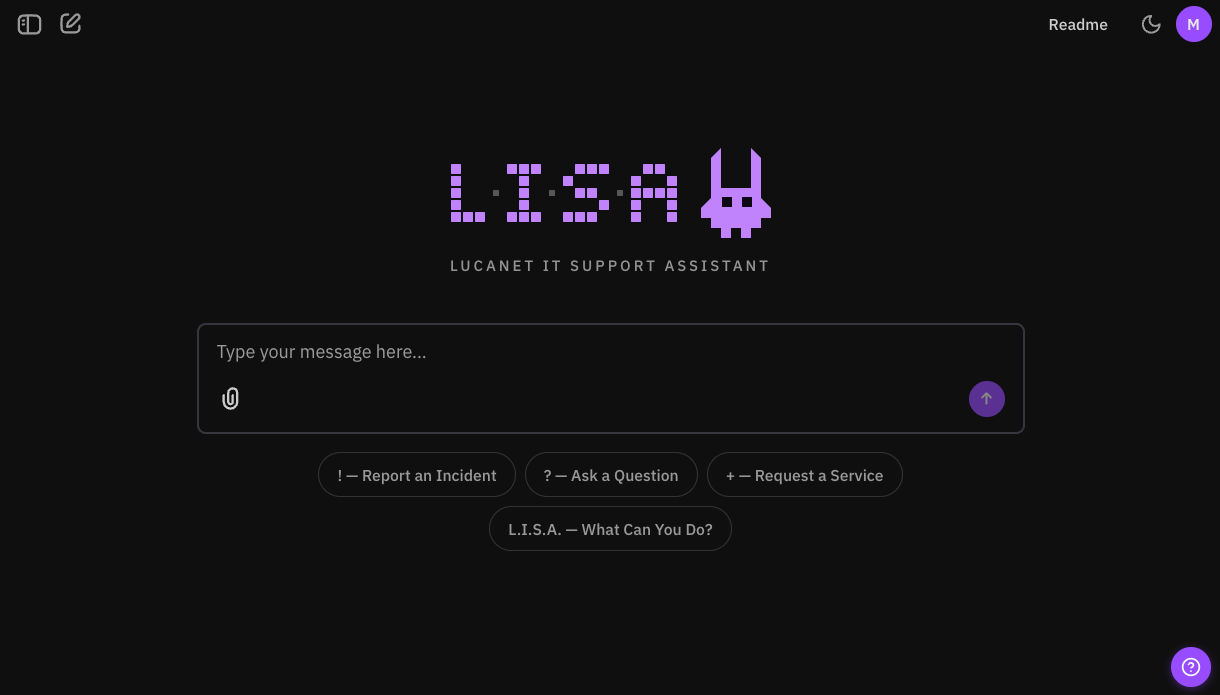
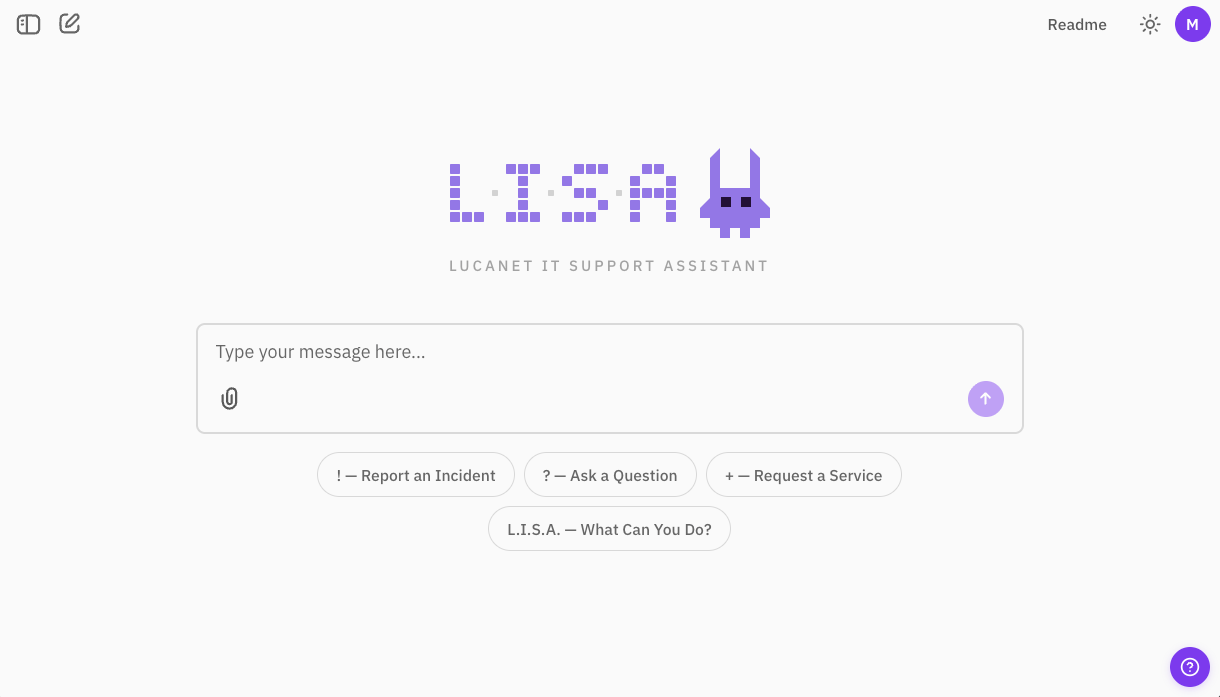
 Report, ask, or request — one interface for all IT support
Challenge
Tickets arrived incomplete. Vague descriptions, missing device info, no error codes. The support team spent more time chasing clarification than fixing problems.
Without structured classification, nothing downstream worked. Routing was guesswork, patterns were invisible, and there was no foundation for automation. The knowledge base had answers to most common questions, but employees didn’t search it. The same issues generated the same tickets week after week.
Most tickets had known resolutions. The problem was getting answers to employees before they created a ticket.
Convo AgentUnderstands the request
Triage AgentClassifies and routes
AutomationInstant resolution
Human AgentsExpert resolution
Approach
We analysed over 10,000 historical tickets, classifying each one with LLM enrichment into a structured Service-Action-Object taxonomy. This revealed where volume concentrated, which issues had known resolutions, and where deflection would have the most impact.
A multi-agent system, not one model doing everything. The conversation agent gathers context from KB search, web search, and the service catalog. The triage agent classifies and routes with near-deterministic precision, acting directly on Jira. Different agents, different tools, different parameters.
An agent is only as good as what it knows. We created article templates and writing guidance, then trained the ITSD team to author over 200 knowledge base articles. Deflection quality tracks directly with KB coverage.
Once a ticket is classified, deterministic workflows take over. N8N picks up structured tickets and runs the resolution: license provisioning, permission changes, onboarding sequences. Known issues resolve end-to-end without a human ever being assigned.
LISA sits inside Lucanet’s existing ITSM stack — a chat interface, authenticated via SSO, that knows who’s asking and what they have access to.
Every message is classified by intent. Questions get answered from the knowledge base. Incidents get troubleshooting steps before a ticket is offered. Service requests collect the right information upfront. The goal at every stage: resolve before escalating.
When a ticket is needed, the triage agent classifies it against the service taxonomy and explains its reasoning. Why this team, why this priority. Human reps receive a structured ticket with the full conversation attached, not a one-line subject.
Every classification decision is logged with its reasoning. The team reviews edge cases, evaluates accuracy, and the system learns from real usage.
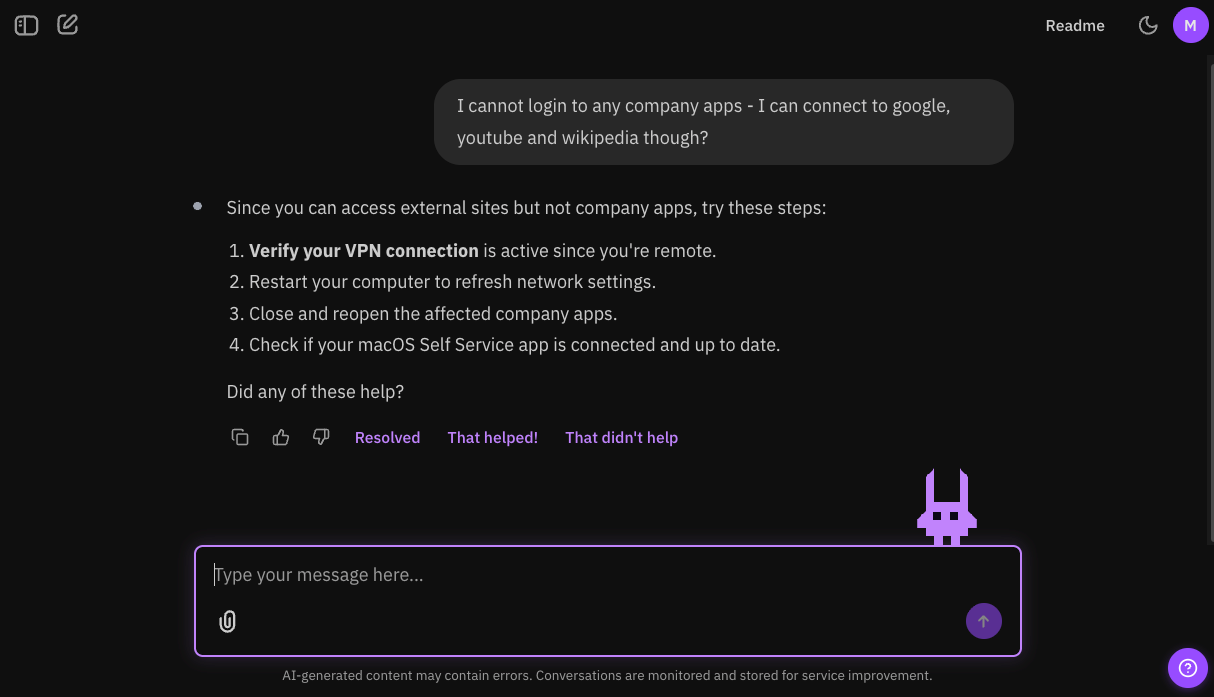
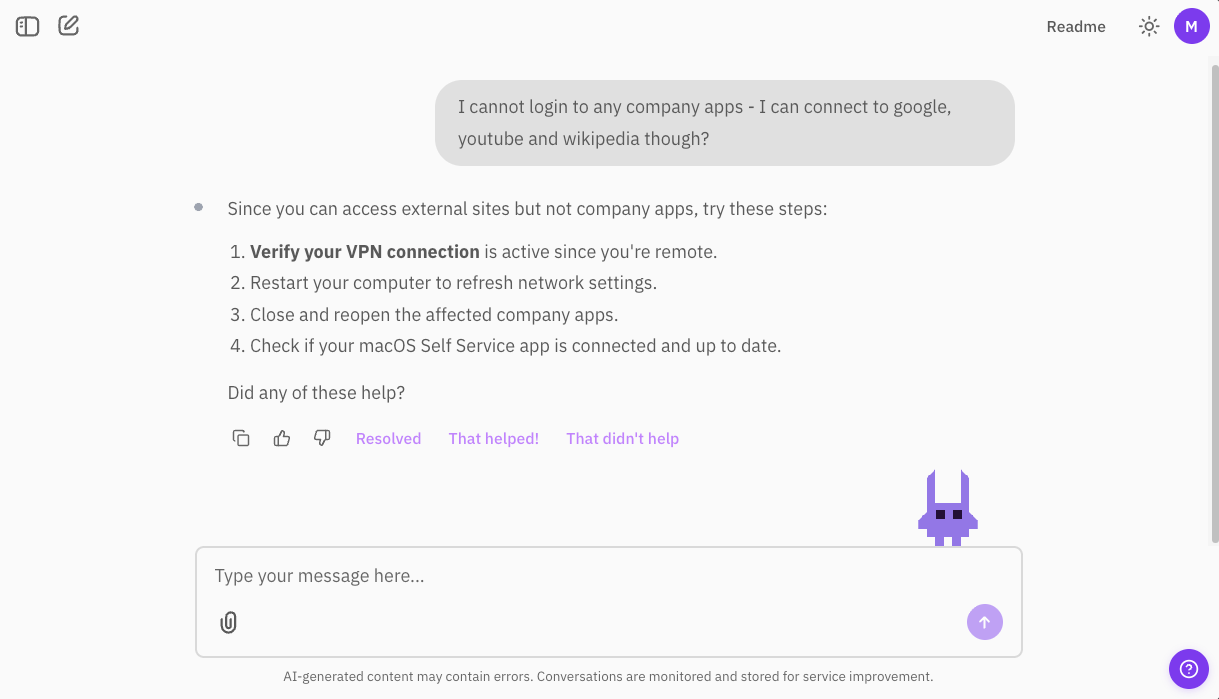 Device-aware troubleshooting — steps tailored to the user’s OS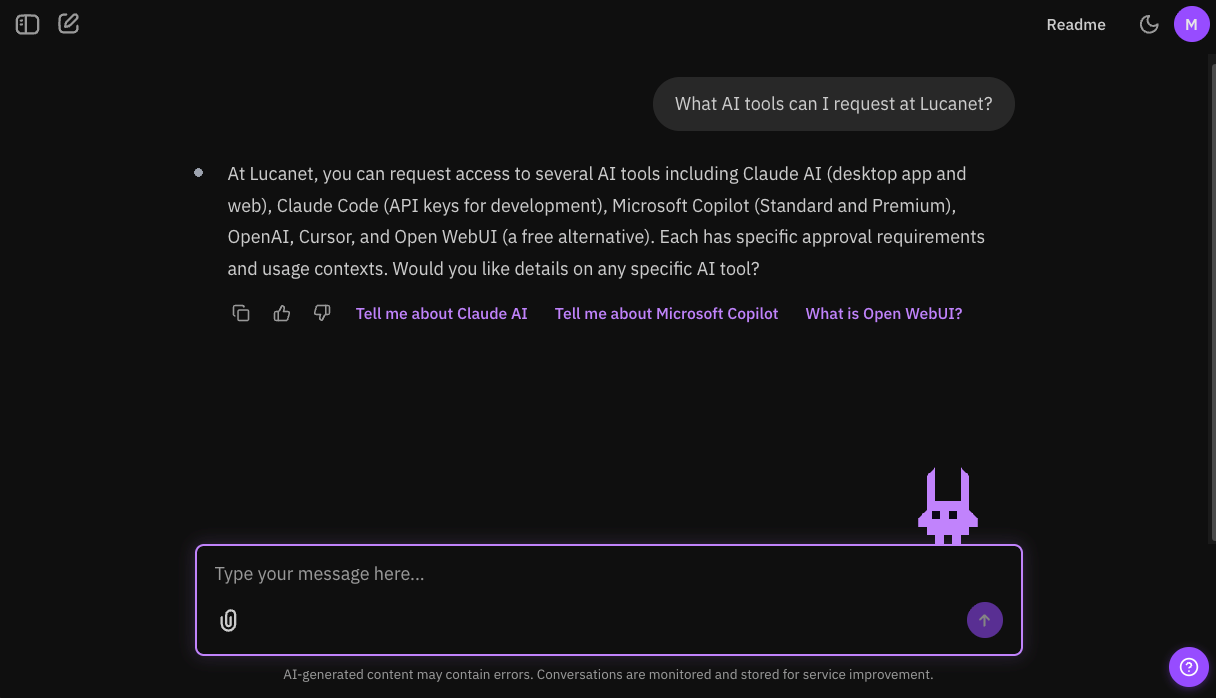
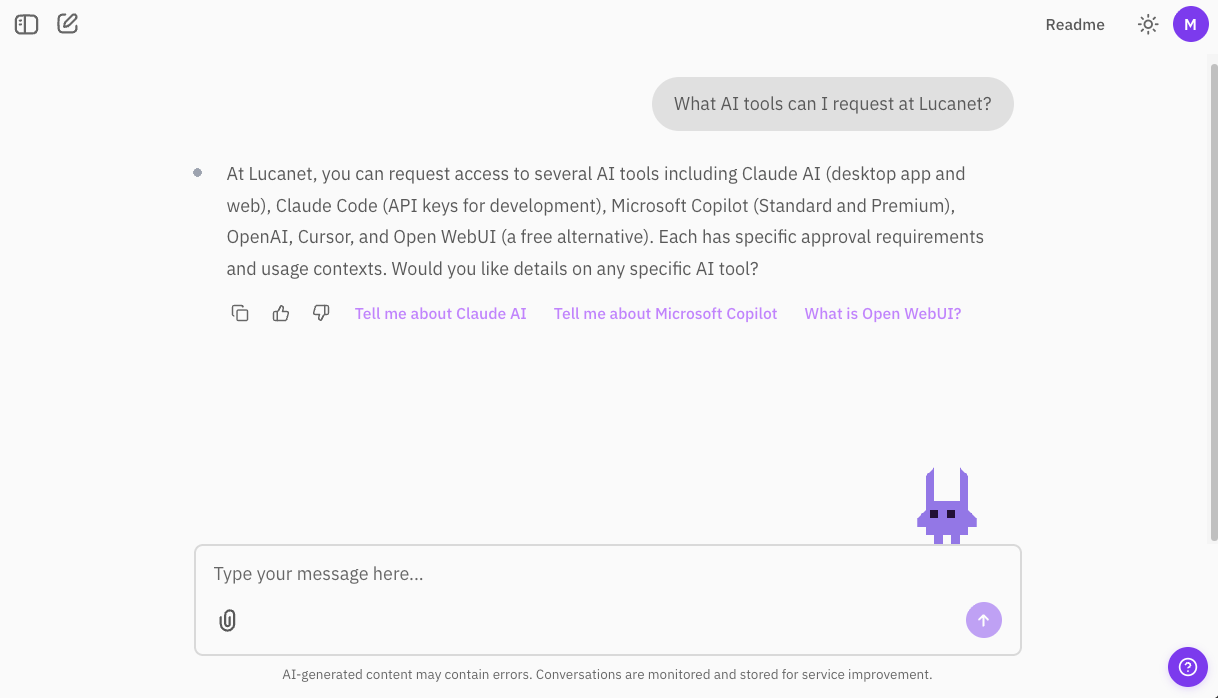 Knowledge base — answers from internal docs with follow-ups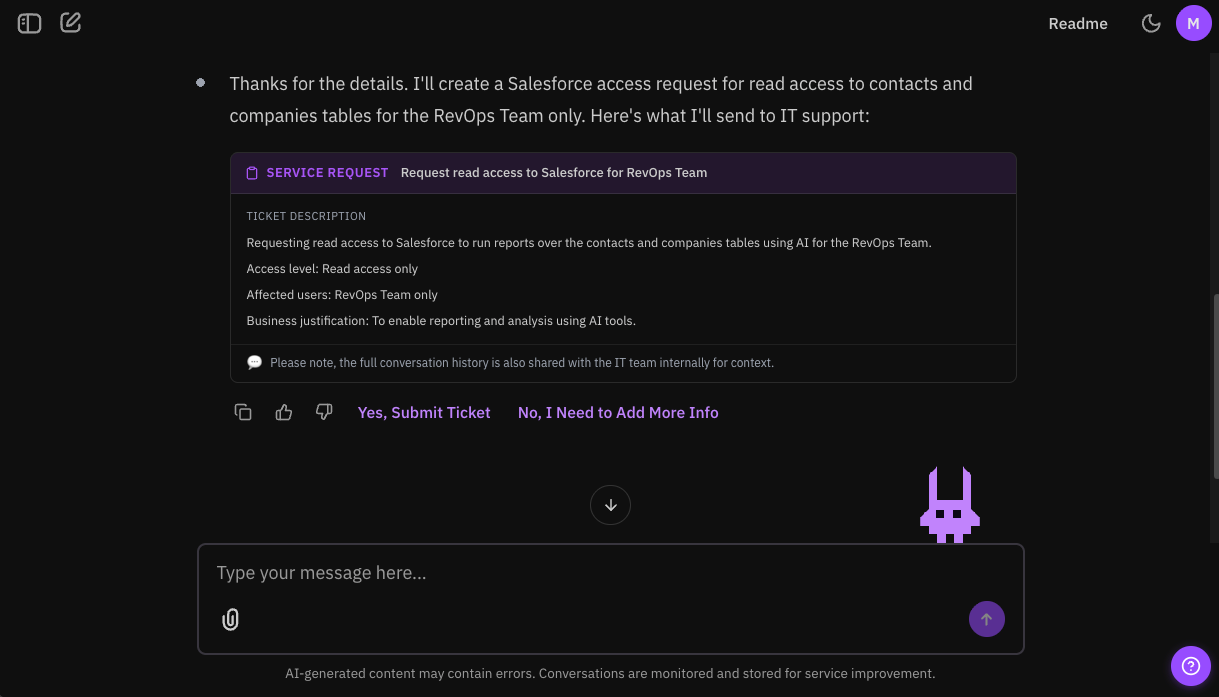
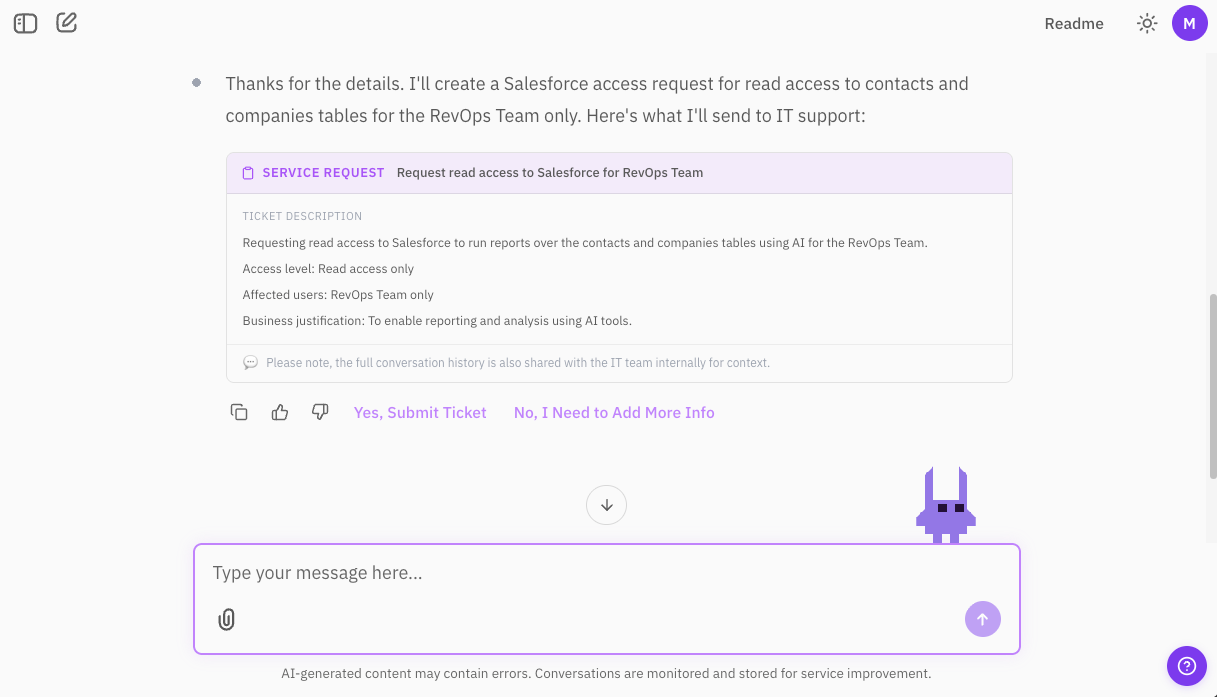 Ticket creation — structured requests with full conversation context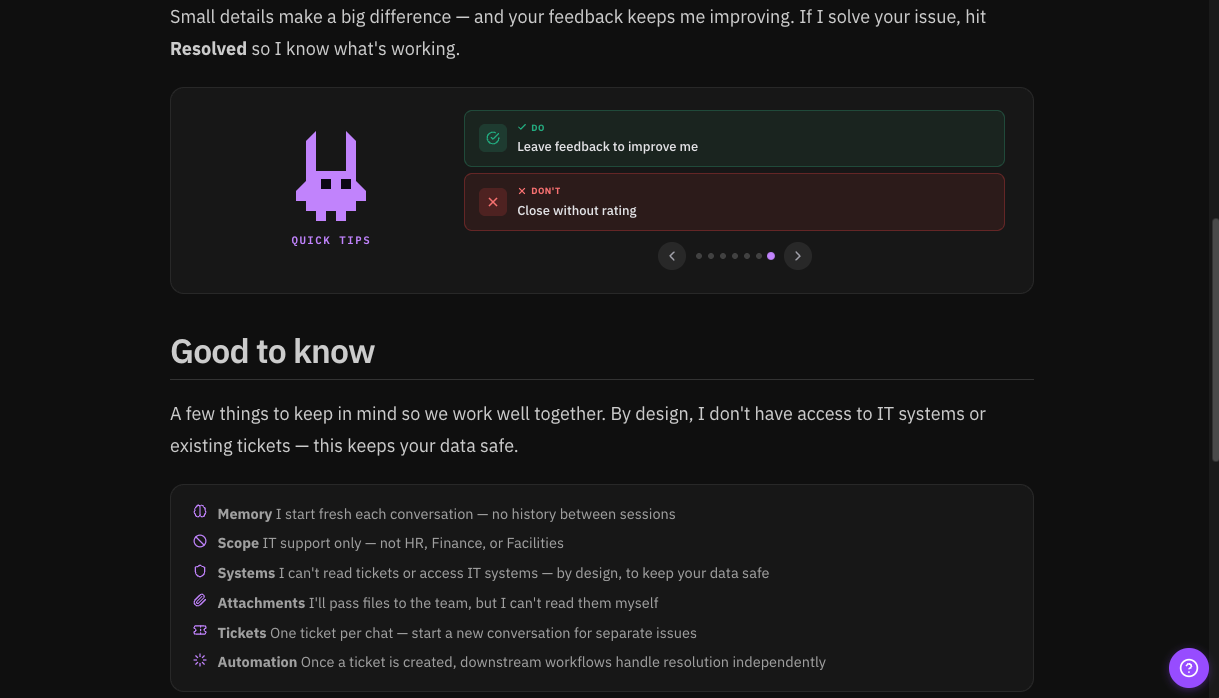
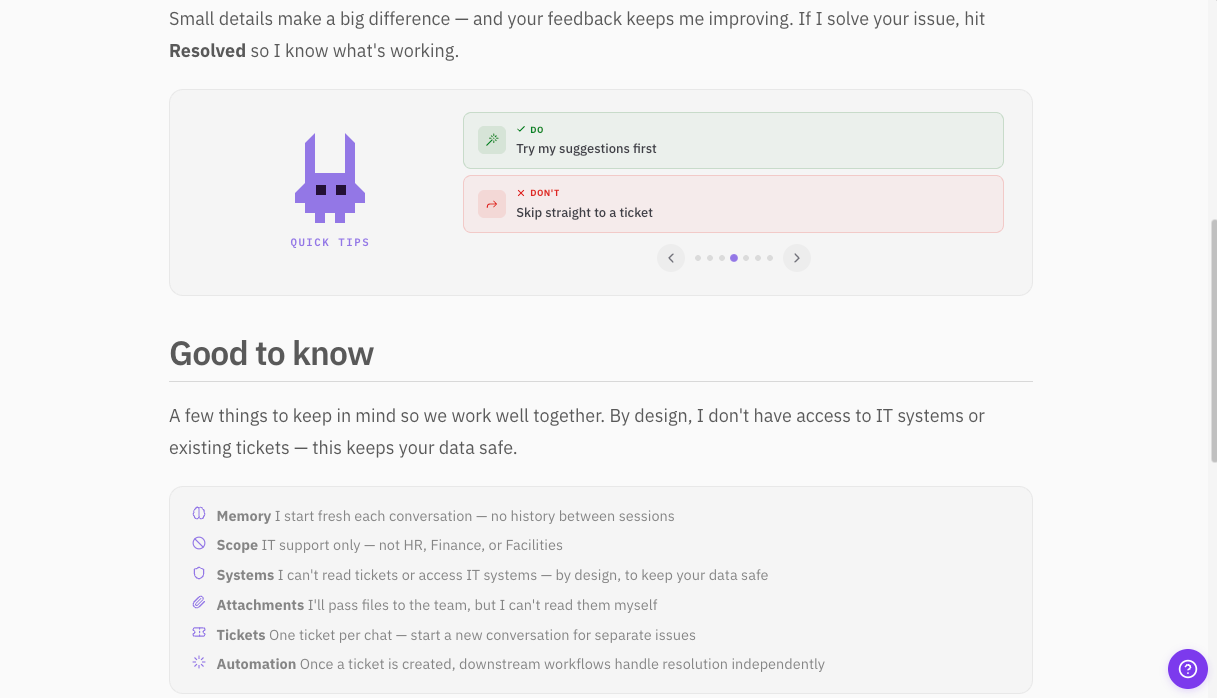 Built-in guidance — scope, boundaries, and feedback prompts
Result
From scoping to company-wide rollout: 3 months. Built-in analytics track deflection rates, response quality, and resolution patterns across every conversation. The dashboard surfaces KB gaps, identifies automation candidates, and tells the team exactly where to invest next.
40% of tickets now resolve without a human touching them.